Writing as catharsis -- as well as to uncover one's innate joyful Self -- is nothing new. John Lee and I talked about this extensively in Writing from the Body. Getting to the "grammar of the gut" and saying what needs to be said isn't as easy as it sounds, so we served up our favorite insights, experiences, and writing exercises for healing the fear-stricken Inner Writer and silencing the Inner Critic.
What is new (to me) is the healing phenomenon called expressive writing, now backed up by real live research. It's the result of some smarties with a lot of chutzpah sticking their scientific necks out. While others peer into microscopes hoping to discover the final cure, these folks care enough about those in treatment Right Now to study how writing about your life can positively affect a cancer patient's outlook and boost the healing process.
The patients themselves -- jotting poetry and memoir in their journals through chemo-sickness and fistfuls of hair -- make these ballsy scientists look feeble. I don't know what it is that makes you pick up a pen and paper, or type or text about the crappiness that is cancer treatment, but these people do it. They gather up the precious energy they have, and they do it. I admire them.
As a book editor, I've heard enough whining about how hard it is to write (pause to lay hand upon brow) to last my lifetime, however long or short it may be. And I can tell you: Writing is a lot about showing up when you don't feel like it.
So to you who are feeling like hell and writing about the dark places and the light places, I bow deeply. To you who keep showing up in your communities, who just get out there damnit and walk around and pet dogs and speak to children, I bow. Because by showing yourselves to us in sickness as in health, you teach us. We learn what it is to be human, to be in need, to be brave enough to live as you are -- in all seasons.
Somewhere right now there are men and women sitting in a writing circle for cancer patients. One of their members is reading a poem as the others listen intently, nodding their heads. Living in a body that seems hell-bent on erasing itself, where do you find the energy and willingness to write, much less to share those writings?
Now we know that writing heals. Even those of us who demand proof now concede that writing "from the body" brings us into communication with every part of ourselves. We touch levels of pain-fear-confusion-shadow that lead us, counterintuitively, into the unbearably light and simple true nature of ourselves.
So thank you, scientists for proving that writing heals. Thank you, patients willing to reveal your most personal writings for the sake of others who may later suffer as you've suffered. Just knowing you're out there, just knowing how tough you have to be to get so soft and vulnerable in the midst of cancer's craziness, gives me more than hope. It gives me courage.
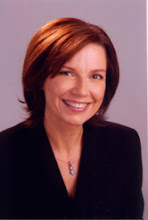
Ceci Miller is founder and president of CeciBooks.com, an editorial and publishing consultancy that empowers authors to write, publish, and market irresistible books that uplift and inspire. A long-ago graduate of the University of Iowa Writers' Workshop, Ceci has written, co-authored, and edited books with bestselling authors and experts since 1988. See book credits.
What is new (to me) is the healing phenomenon called expressive writing, now backed up by real live research. It's the result of some smarties with a lot of chutzpah sticking their scientific necks out. While others peer into microscopes hoping to discover the final cure, these folks care enough about those in treatment Right Now to study how writing about your life can positively affect a cancer patient's outlook and boost the healing process.
The patients themselves -- jotting poetry and memoir in their journals through chemo-sickness and fistfuls of hair -- make these ballsy scientists look feeble. I don't know what it is that makes you pick up a pen and paper, or type or text about the crappiness that is cancer treatment, but these people do it. They gather up the precious energy they have, and they do it. I admire them.
As a book editor, I've heard enough whining about how hard it is to write (pause to lay hand upon brow) to last my lifetime, however long or short it may be. And I can tell you: Writing is a lot about showing up when you don't feel like it.
So to you who are feeling like hell and writing about the dark places and the light places, I bow deeply. To you who keep showing up in your communities, who just get out there damnit and walk around and pet dogs and speak to children, I bow. Because by showing yourselves to us in sickness as in health, you teach us. We learn what it is to be human, to be in need, to be brave enough to live as you are -- in all seasons.
Somewhere right now there are men and women sitting in a writing circle for cancer patients. One of their members is reading a poem as the others listen intently, nodding their heads. Living in a body that seems hell-bent on erasing itself, where do you find the energy and willingness to write, much less to share those writings?
Now we know that writing heals. Even those of us who demand proof now concede that writing "from the body" brings us into communication with every part of ourselves. We touch levels of pain-fear-confusion-shadow that lead us, counterintuitively, into the unbearably light and simple true nature of ourselves.
So thank you, scientists for proving that writing heals. Thank you, patients willing to reveal your most personal writings for the sake of others who may later suffer as you've suffered. Just knowing you're out there, just knowing how tough you have to be to get so soft and vulnerable in the midst of cancer's craziness, gives me more than hope. It gives me courage.
Ceci Miller is founder and president of CeciBooks.com, an editorial and publishing consultancy that empowers authors to write, publish, and market irresistible books that uplift and inspire. A long-ago graduate of the University of Iowa Writers' Workshop, Ceci has written, co-authored, and edited books with bestselling authors and experts since 1988. See book credits.